
Tiger Saggar Raku
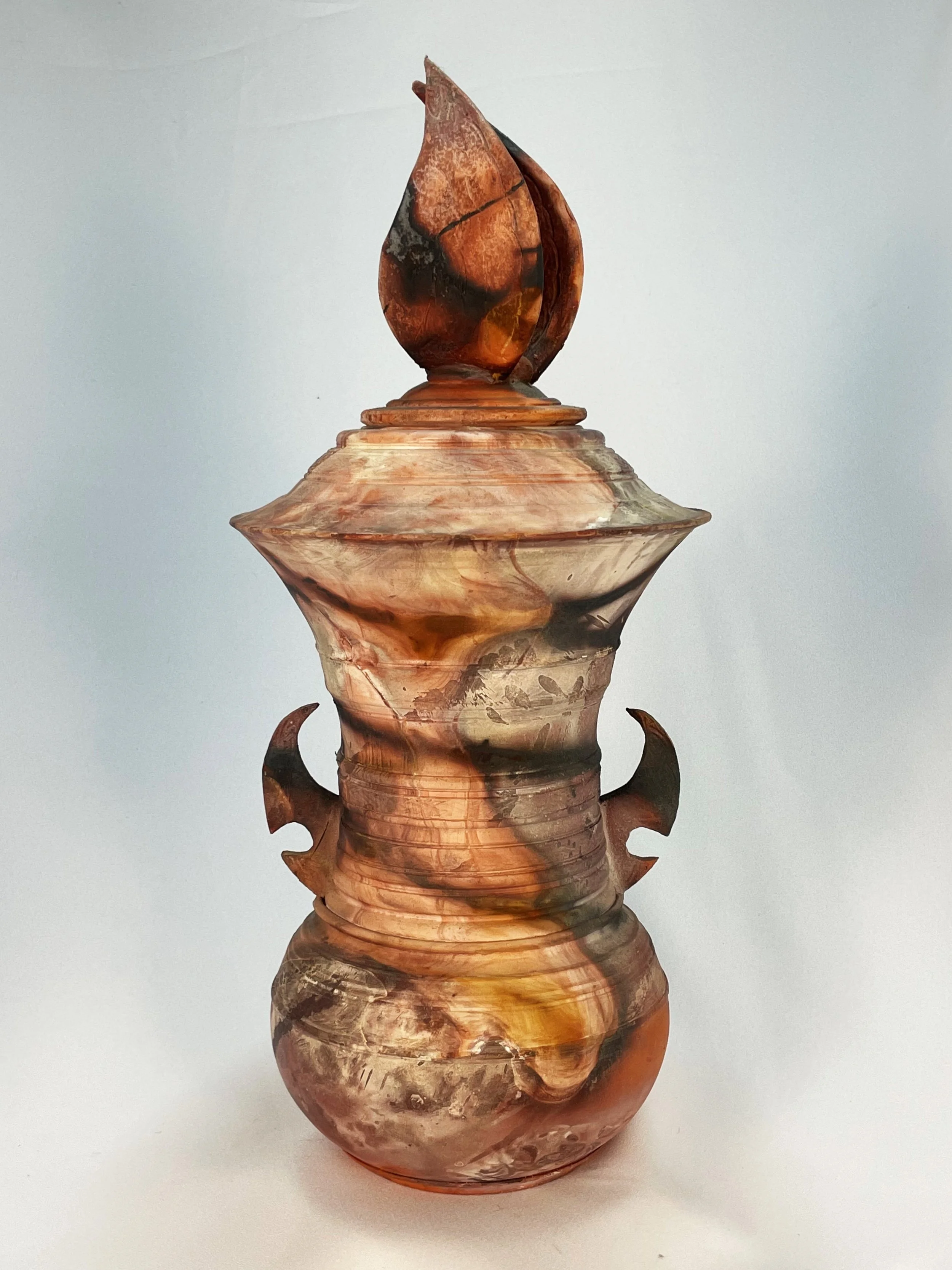
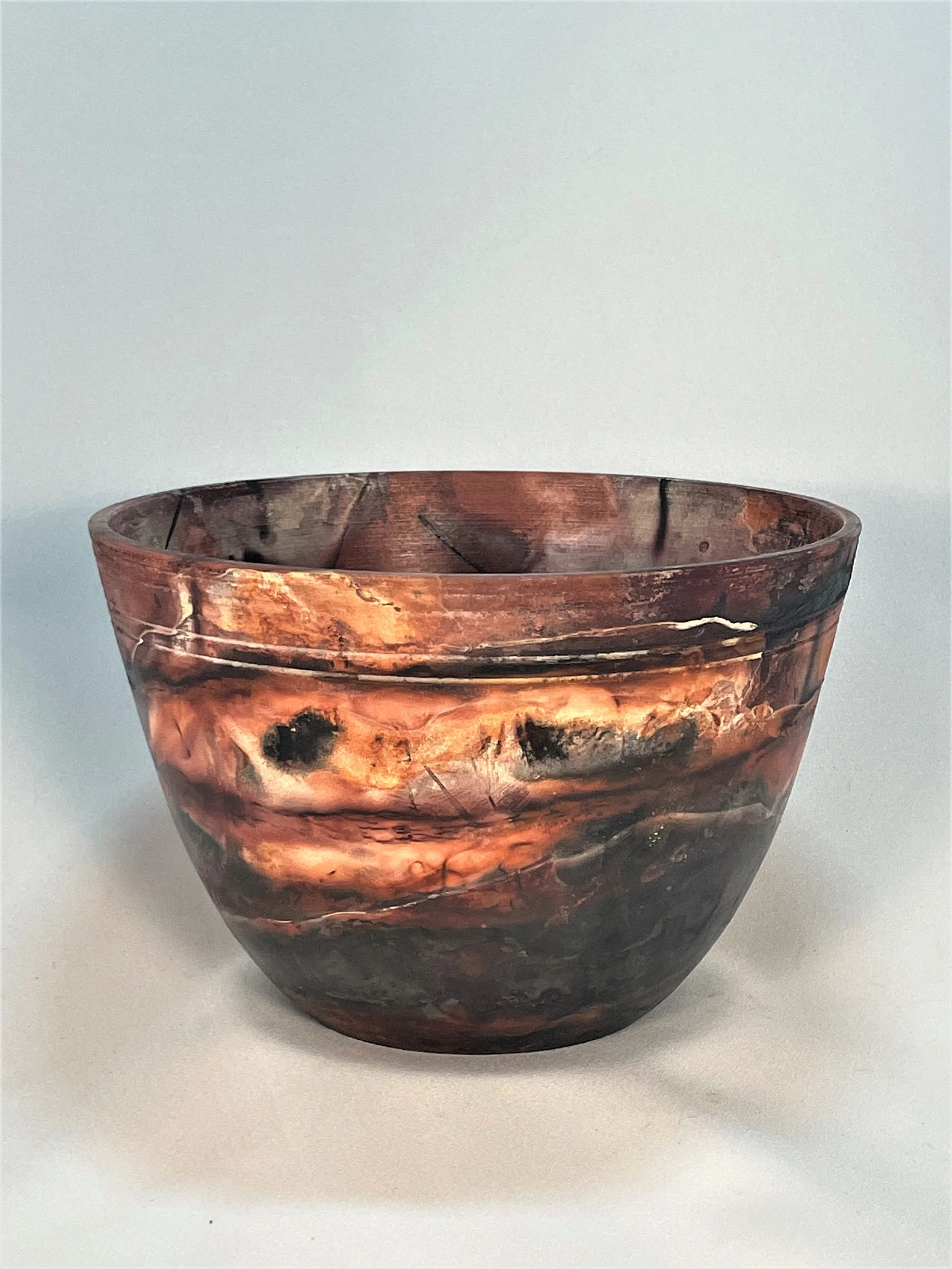
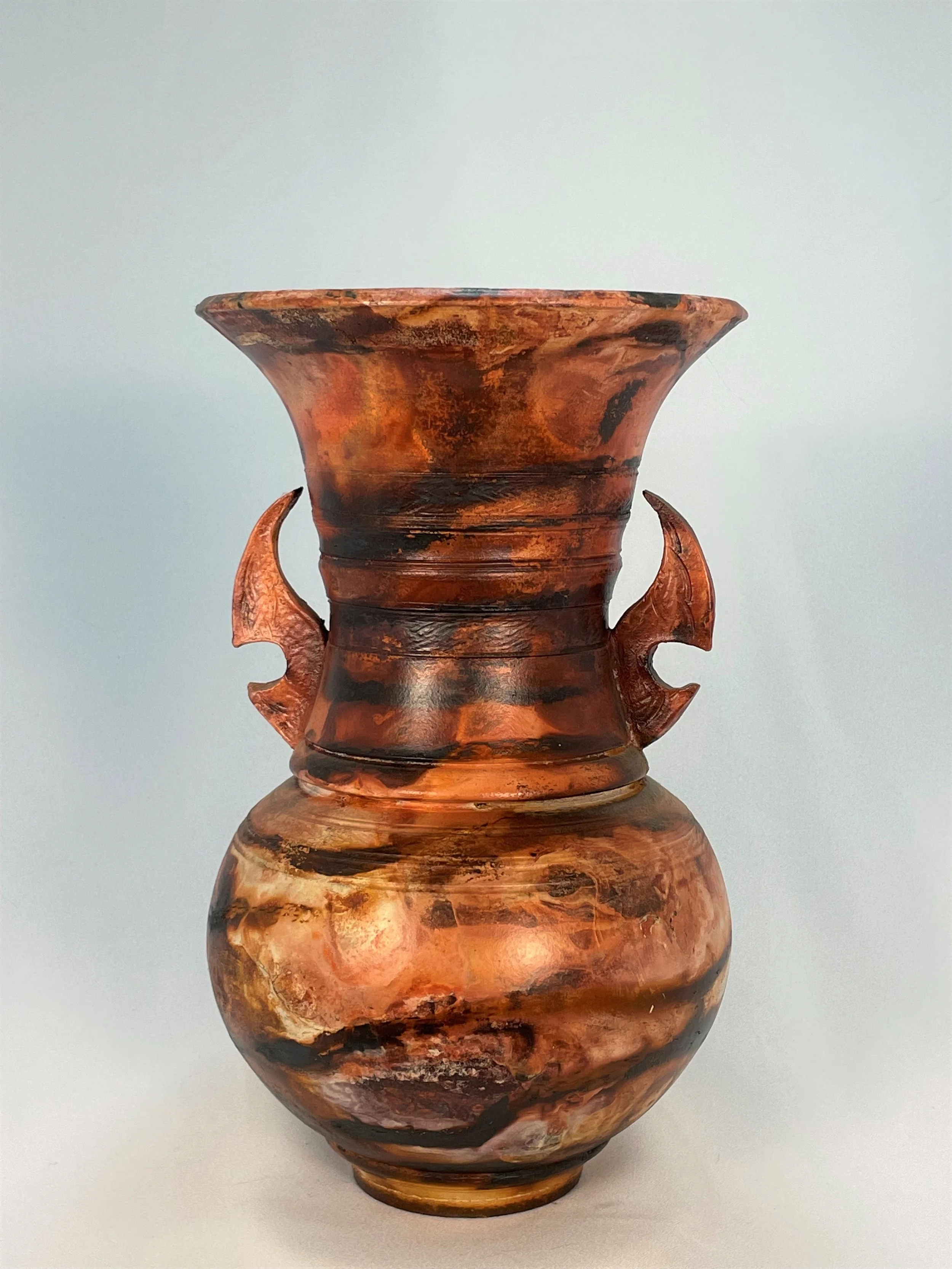
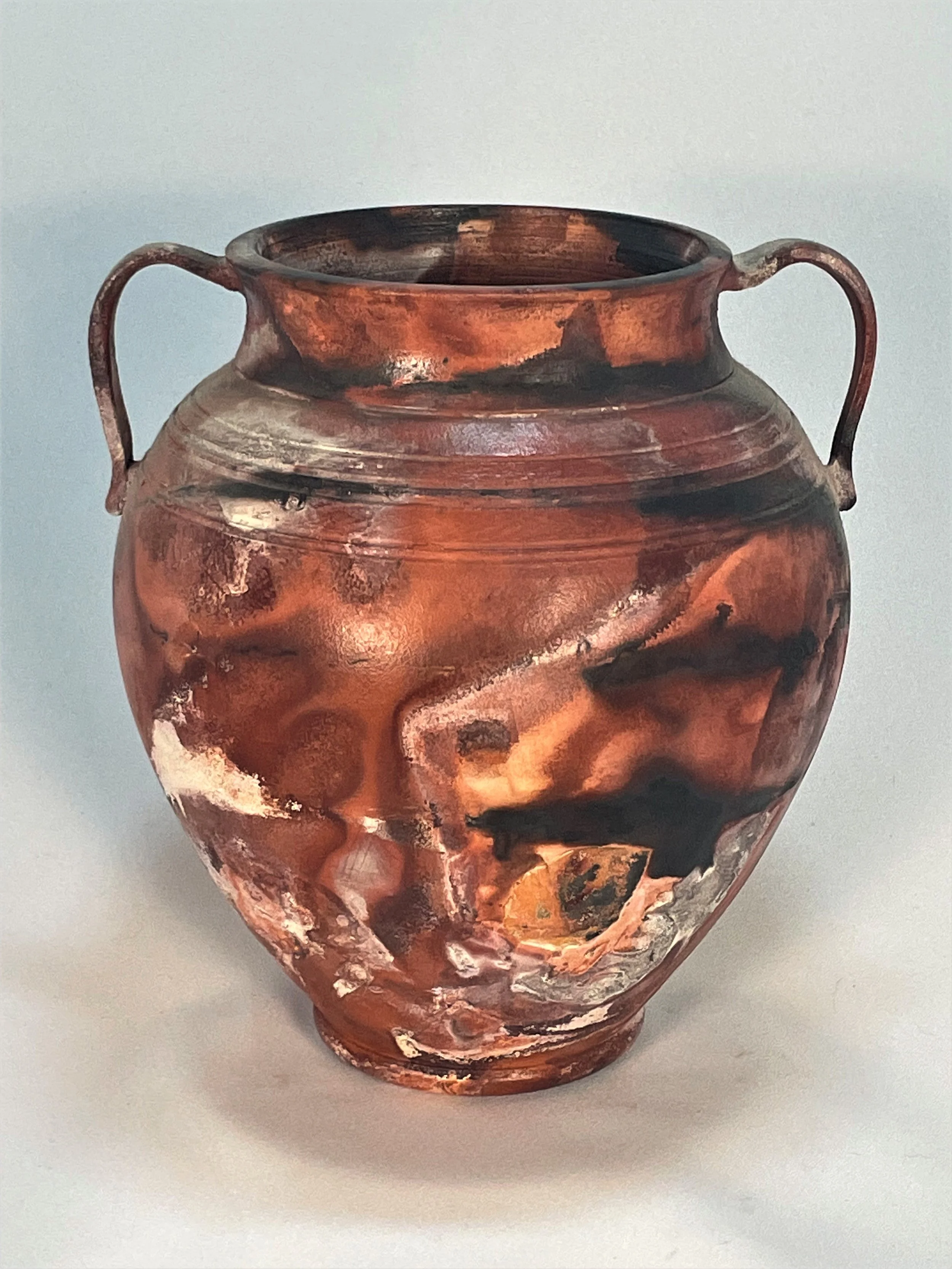
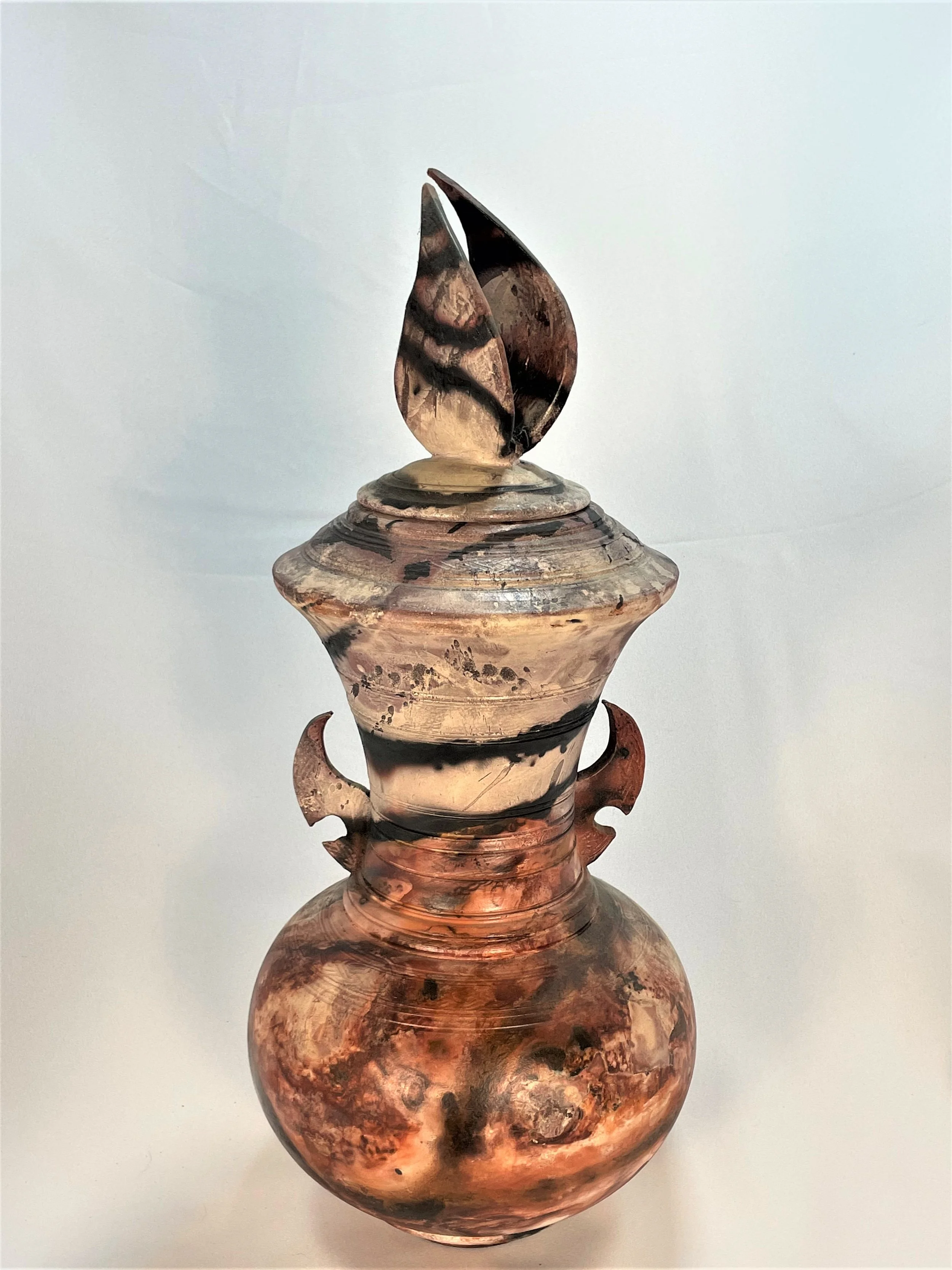
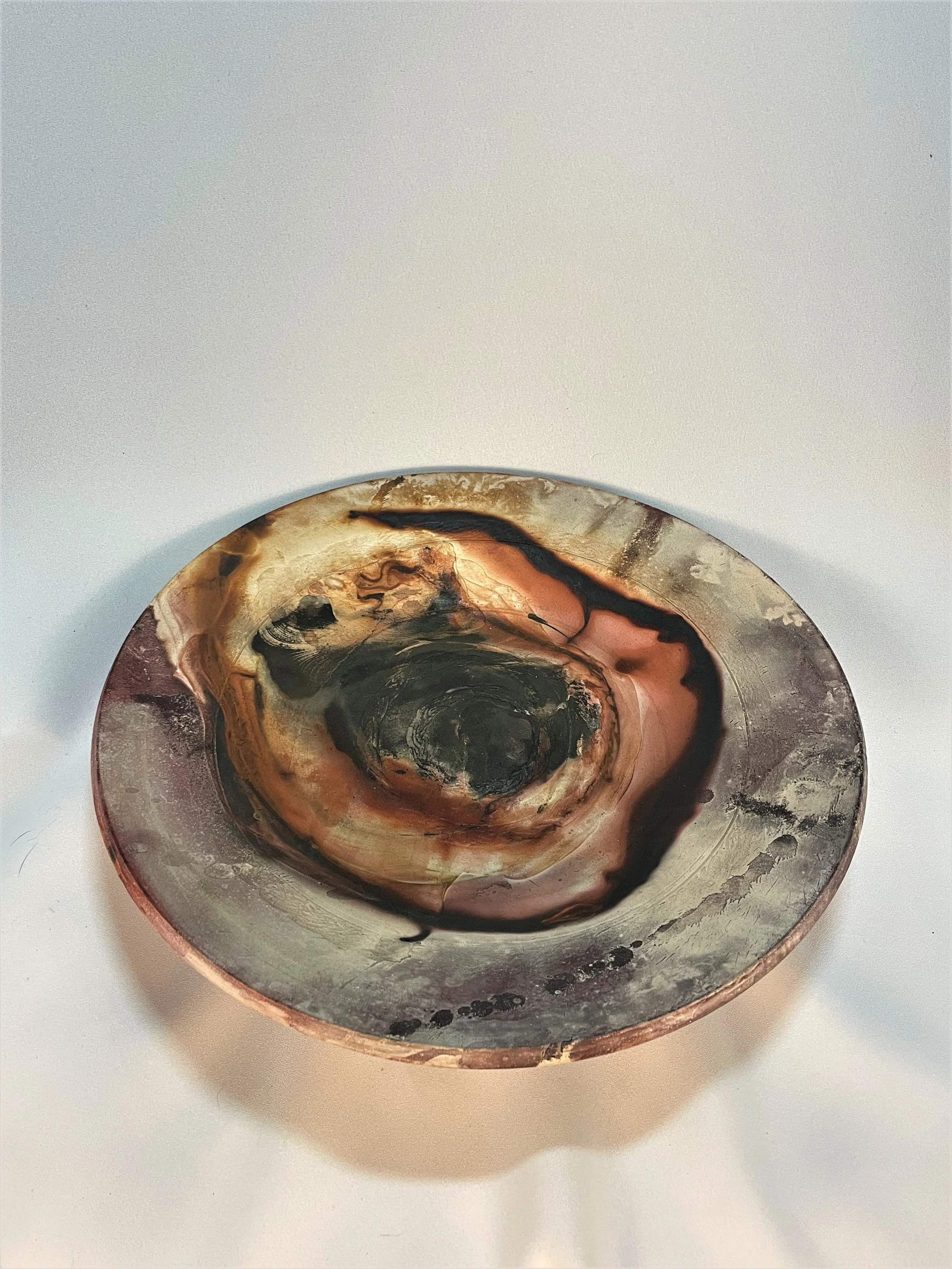
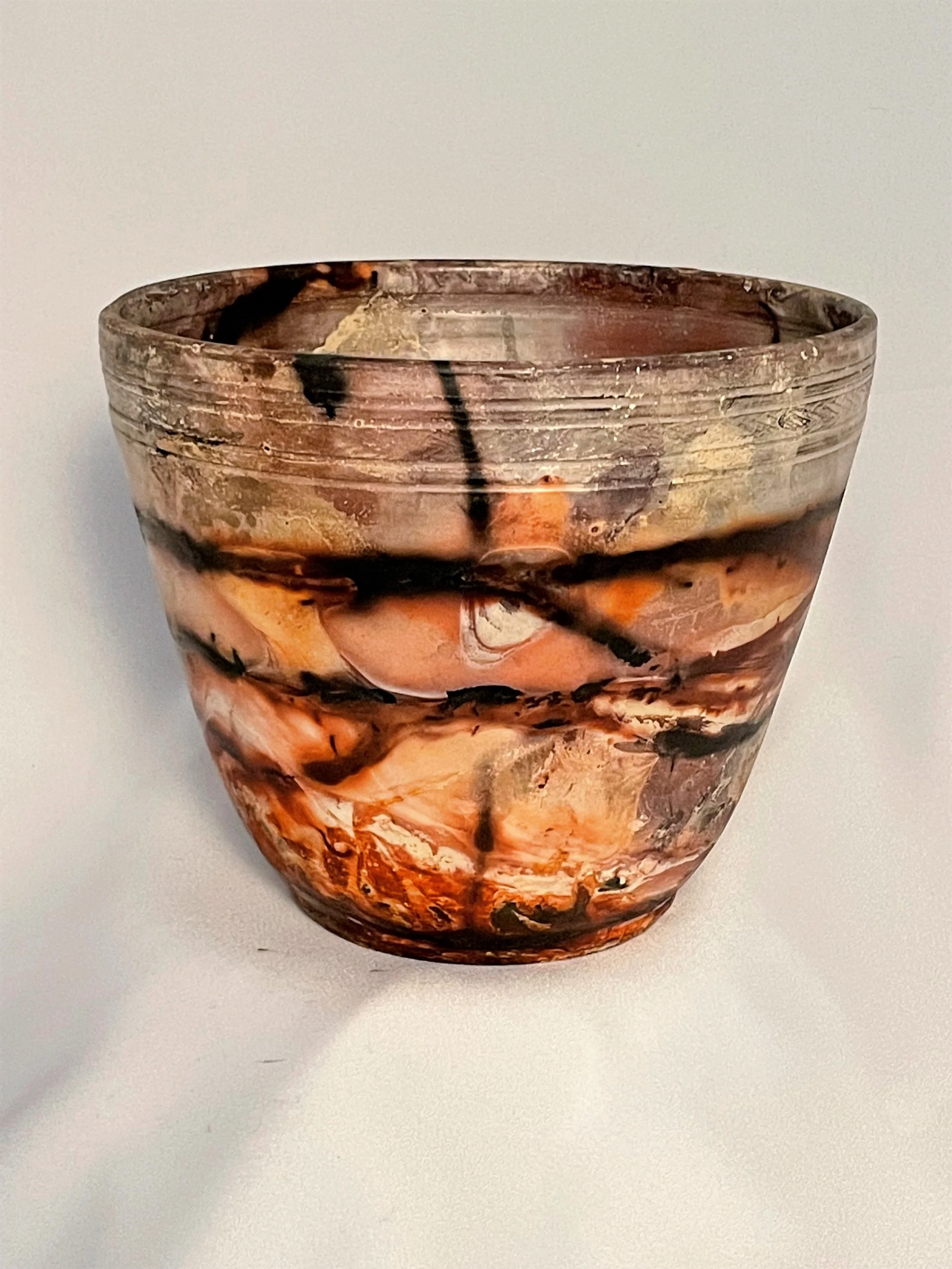
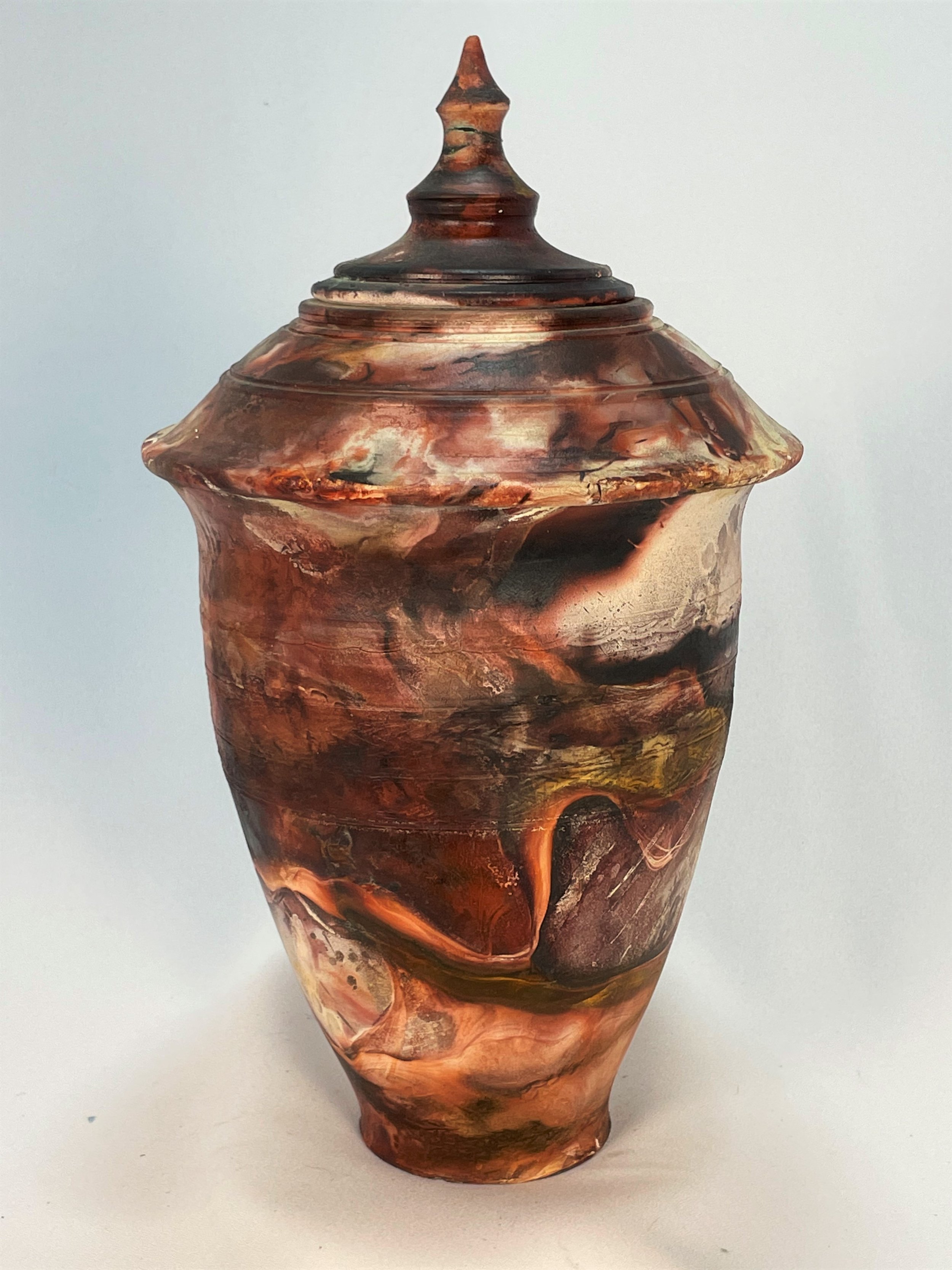
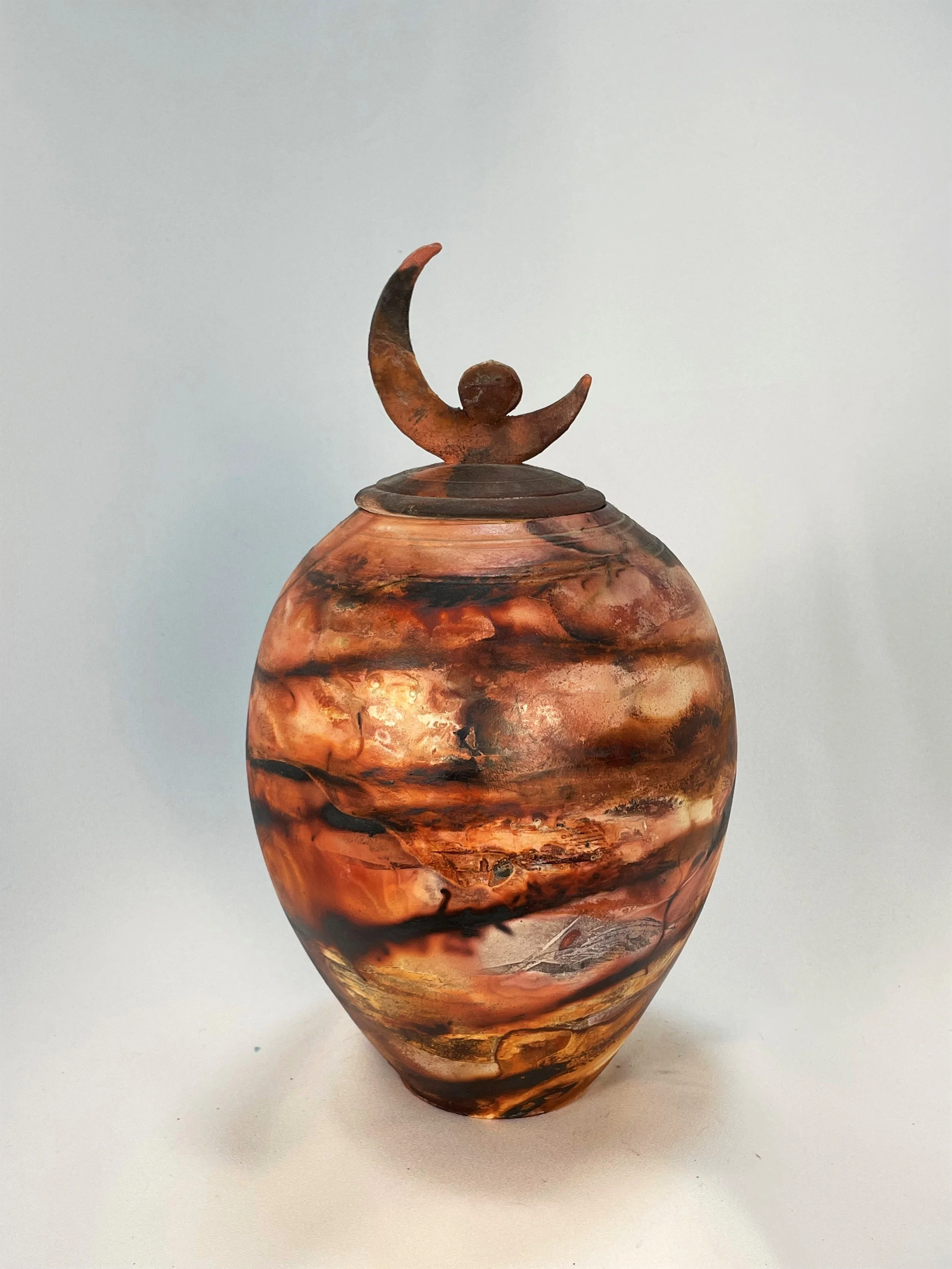
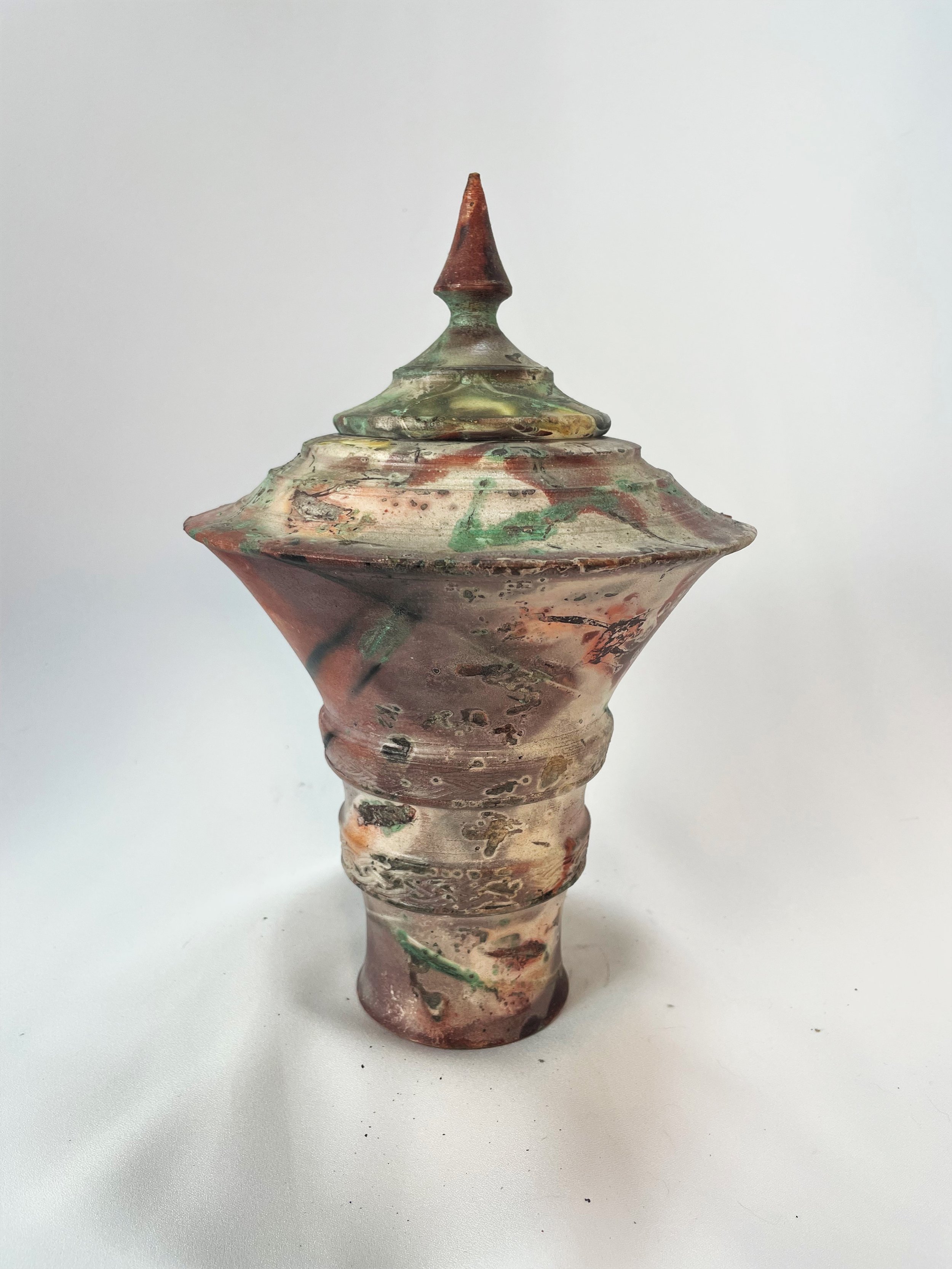
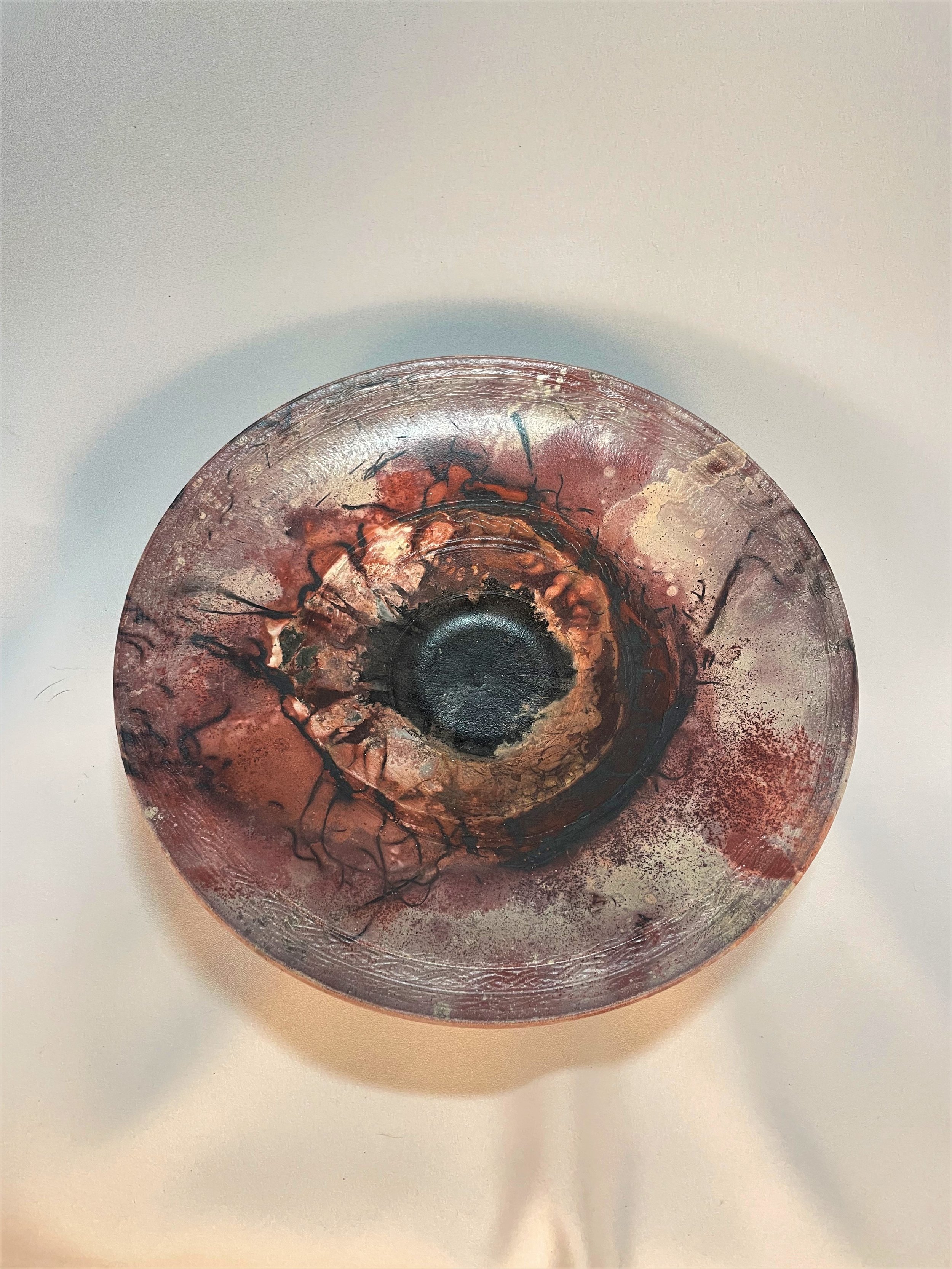
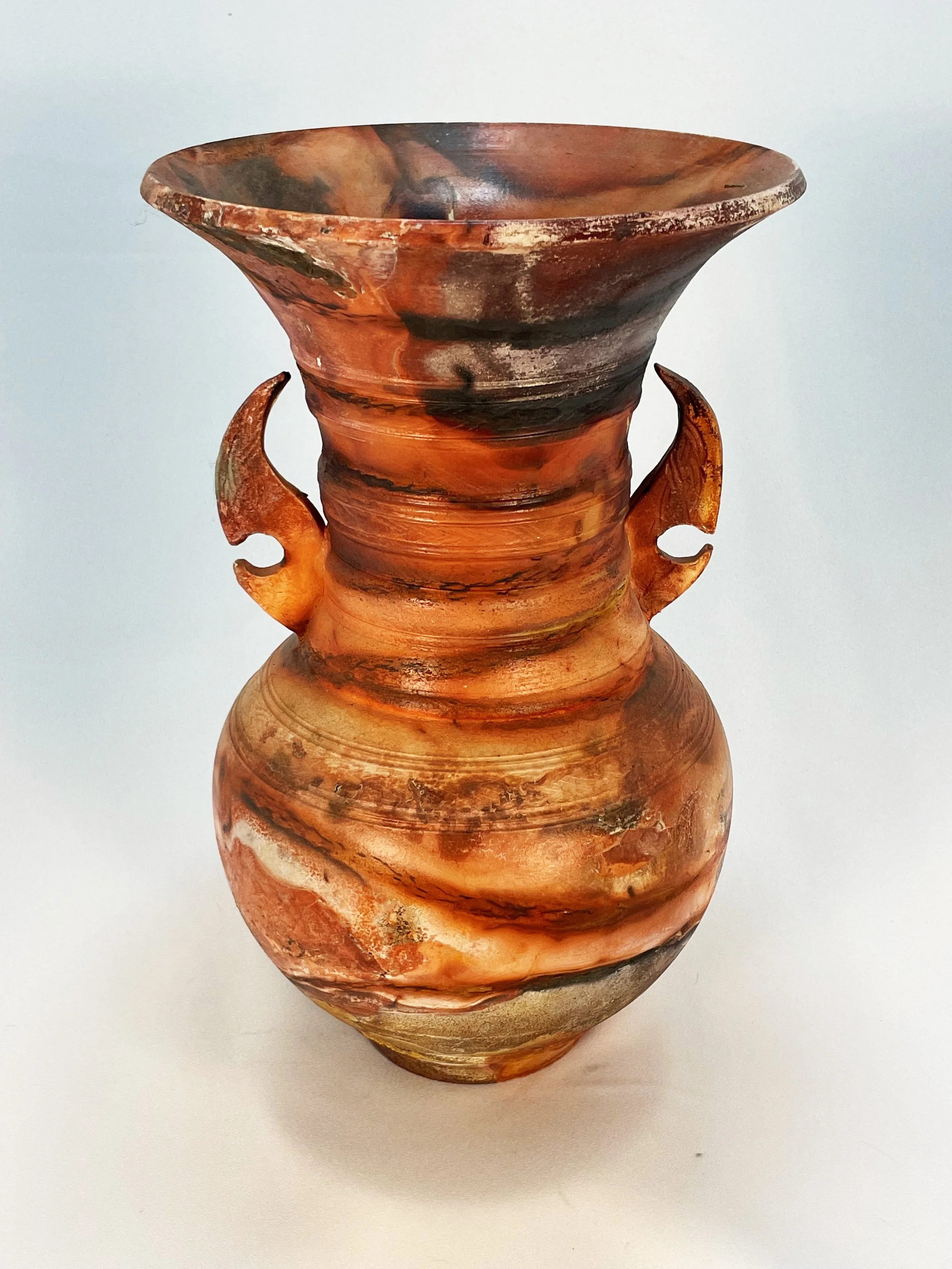
Above, you can see the rich variety of my Tiger Saggar. I can achieve fascinating and beautiful effects on non-glazed pieces, unlike anything seen previously on Saggar fired pieces. Typical Saggar firing refers to placing the piece of ware into a ceramic chamber after firing, allowing it to interact with combustible materials inside the chamber; these leave an imprint on the final fired piece.
The term "Tiger" refers to the very interesting (choose one) intriguing/attractive/engaging darkened lines I produce on the forms that, frankly, I have never seen done by anyone else. Many of my distinctive "Emperor" forms in this technique are adorned with my exclusive "Wings of Freedom" lid ornaments. I appreciate symbolism in life. If anyone is interested in using a vase as a burial urn, I suggest you look for or request a piece with the wings of freedom lid.
While my Saggar process is similar to traditional Saggar techniques, mine produces extraordinary effects without using any glazes at all. Although many of my other techniques require multiple layers of glazes and time spent spraying, this technique still requires by far the most time and energy. I spend many hours preparing these pieces before they can be fired. First, the ware is bisque fired to 1850 F. Then, before firing in the Raku kiln, it is dipped in an acid wash, affected (? what do you actually do? Say that.) with various metallic oxides, wrapped in a labor-intensive copper-dipped twine that I create, pieces of copper, and other metals.
After this preparation, I fire the pieces in a Raku kiln within an aluminum foil saggar cocoon. I then pull them from the kiln and place each into its own combustion chamber. Finally, when I retrieve it from the chamber, it rises from the ashes and debris, like the Phoenix, to unveil an amazing result. Every piece becomes a unique piece of art unlike any other.
Above, you can see the rich variety of my Tiger Saggar. I am able to achieve extremely interesting and beautiful effects on non-glazed pieces, unlike anything seen previously on Saggar fired pieces. Typical Saggar firing refers to the use of a ceramic chamber to place the piece of ware into for the firing process with combustible materials inside the saggar chamber to leave an imprint on the final fired piece.
The term “Tiger” in the description refers to the very interesting darkened lines I produce on the forms that, frankly, I have never seen done by anyone else. Many of my distinctive “Emperor” forms done in this technique are adorned with my exclusive “Wings of Freedom” lid ornaments. I appreciate symbolism in life. If anyone is interested in using a vase as a burial urn, I suggest you look for or request a piece with the wings of freedom lid.
My Saggar process is different from the traditional Saggar process. Similar though in that despite the amazing effects on the pieces no glazes are utilized at all. Though many of my techniques require multiple layers of glazes and time spraying, this technique by far requires the most time and energy. I spend many hours in the preparation of these pieces before they can be fired. The ware is first bisque fired to 1850 F, then dipped in an acid wash, affected with various metallic oxides, a labor-intensive copper dipped twine that I create, pieces of copper, and other metals. The resulting interesting finish on the pieces is the result of the interaction of the acid, the various metal oxides, and metals placed on the ware, finally fired in a Raku kiln within an aluminum foil saggar cocoon. After firing, the piece is pulled from the kiln, and like the Phoenix, is pulled from the ashes and debris of the process to unveil an amazing result. Every piece becomes a unique piece of art unlike any other.
Examples of the major Tiger Saggar Forms appear below. Click one to see more pieces like it, or visit the Shop now to see all Tiger Saggar and other styles of Raku.