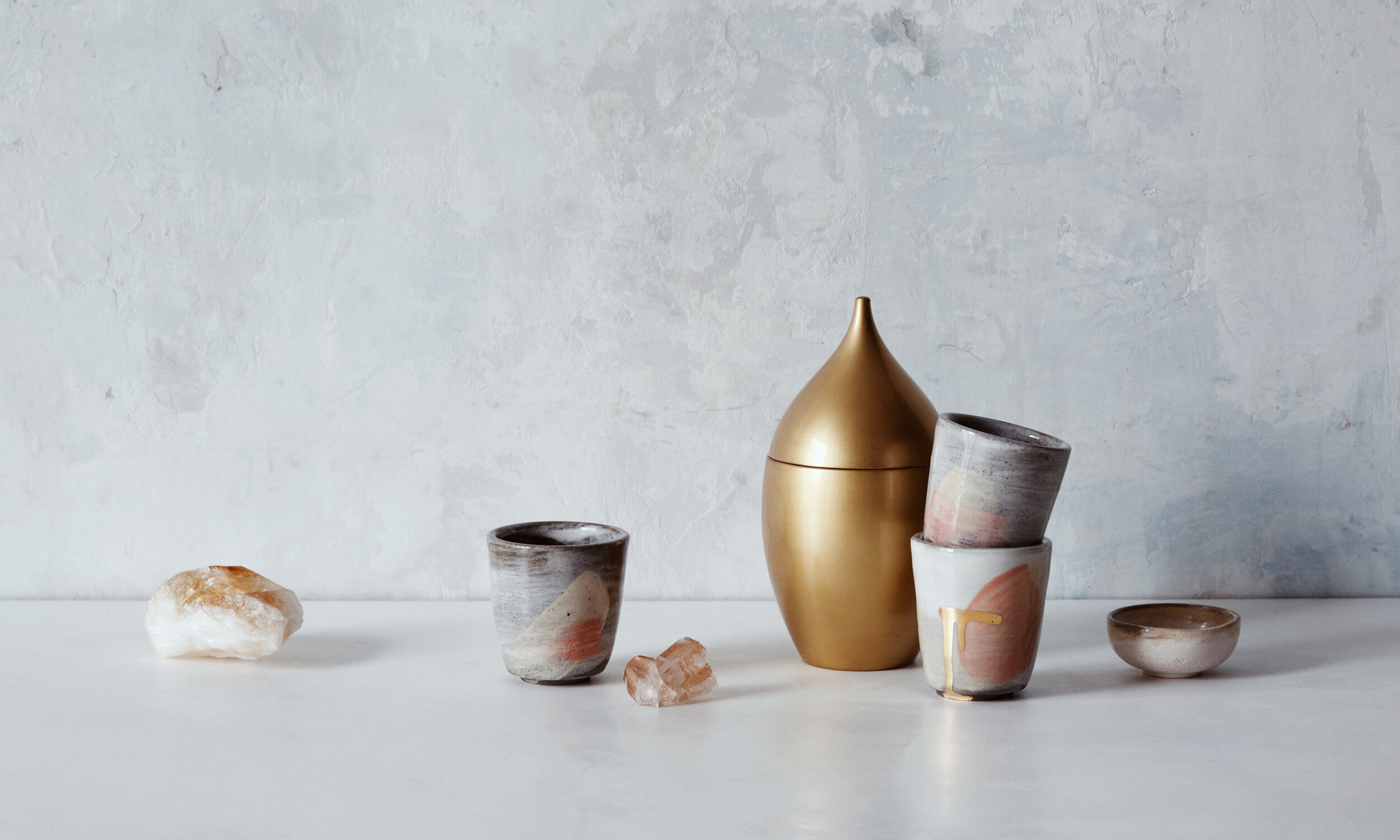
Welcome to Steve Sanders Raku
Beautiful Pottery for Home or Office… For Yourself or Someone You Love.
Welcome to my world of Raku Ceramics. Born of the fire of the fast firing Raku Kiln, Raku pieces, by virtue of the dynamic nature of the process, allows for incredible creativity and variation.

Each of these images represents a major type of Raku process I produce in my studio. Each process comes in a variety of forms, including tall Emperor and Empress vessels created by joining 2 or more pieces, other vessels, with or without ornamental lids, bowls & platters and some that are simply unique in some way.
Scroll below to learn more about each collection. In each collection, click an image to enlarge it. Or…
Visit my Shop or click a link below to begin your exploration of one of the specific Raku styles I produce in my studio.:

Tiger Saggar Bowl
Jewels of Atlantis

Jewels of Atlantis
Lustre
Color Raku

Opalescence
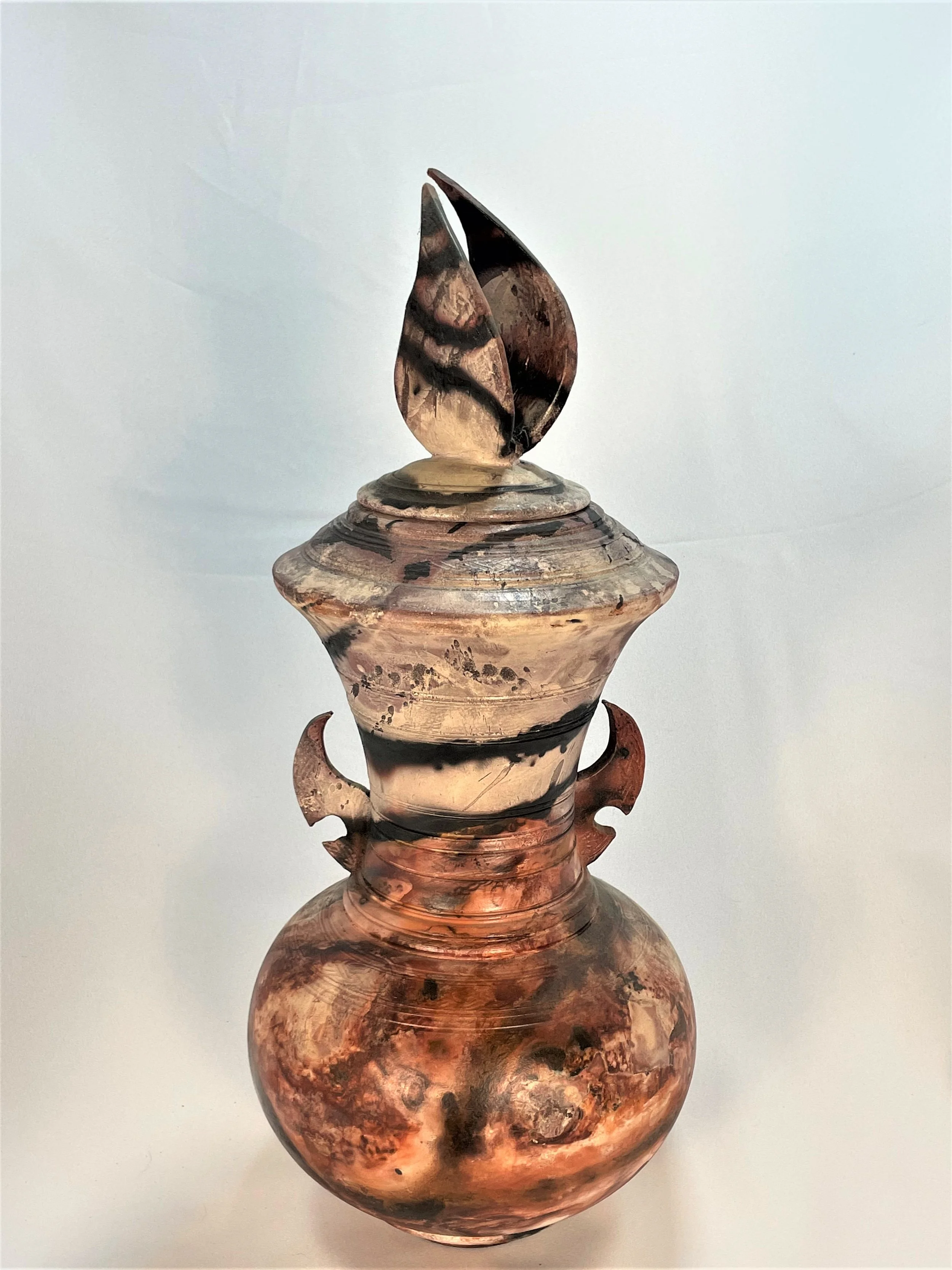
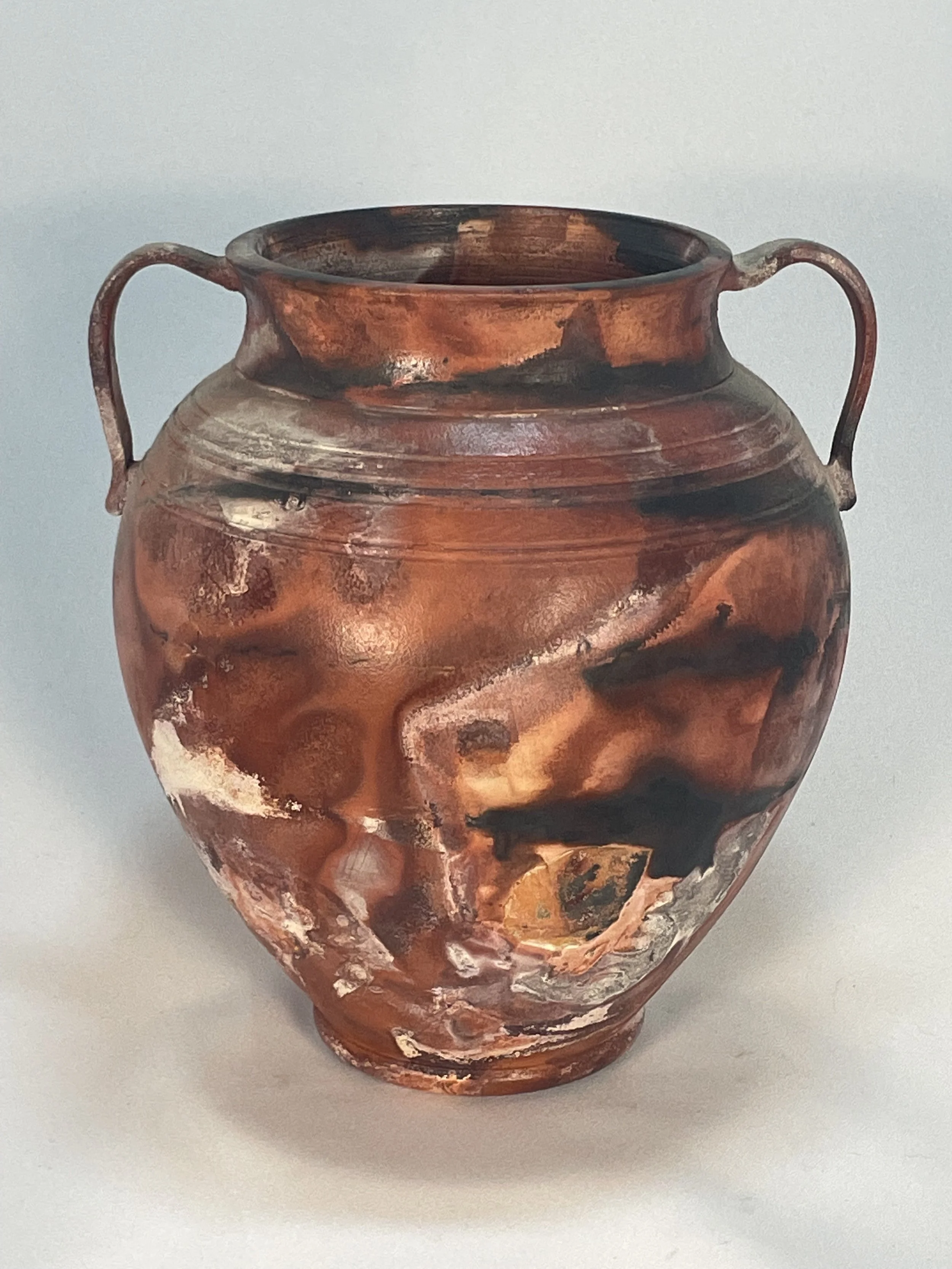
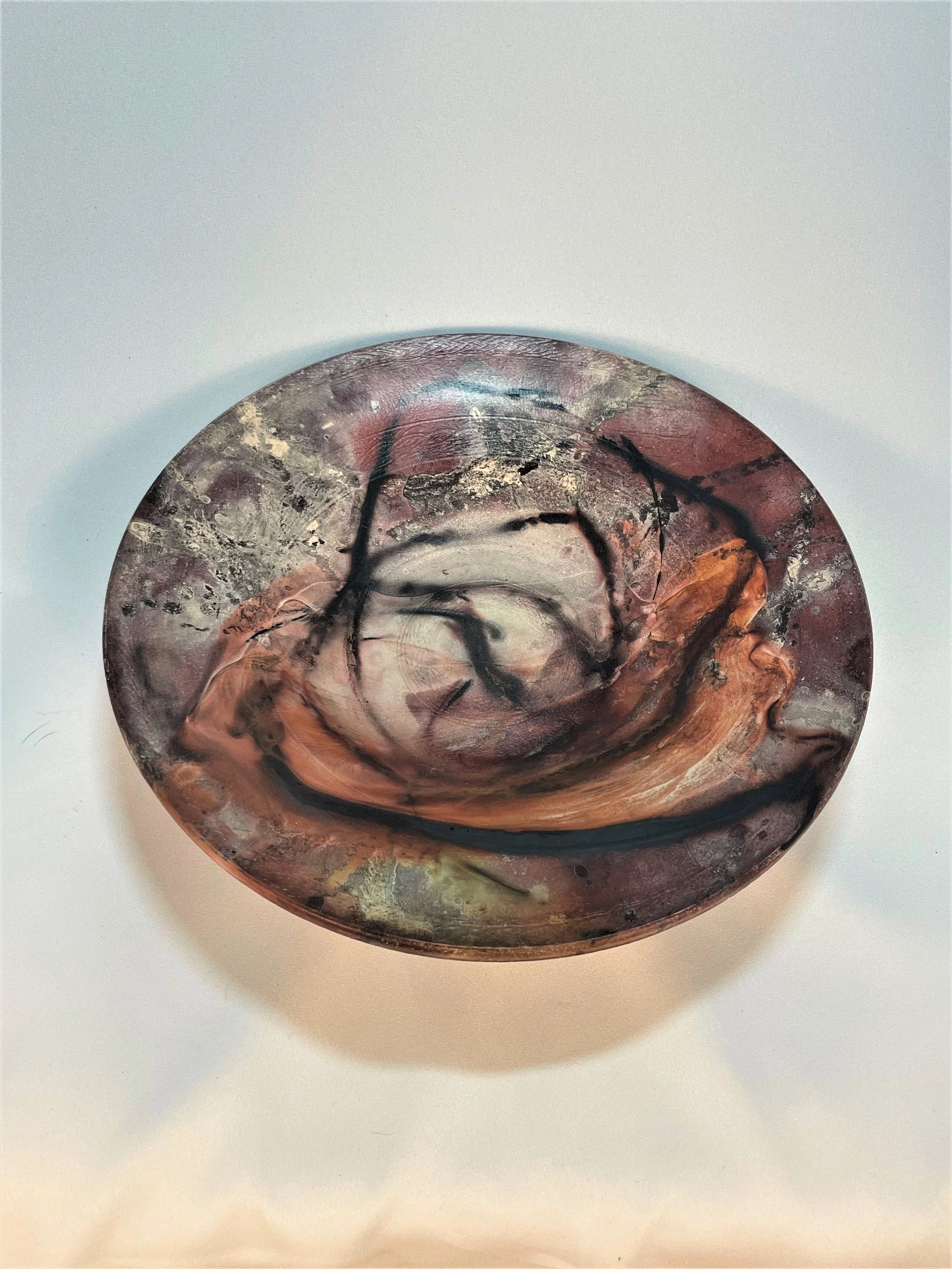
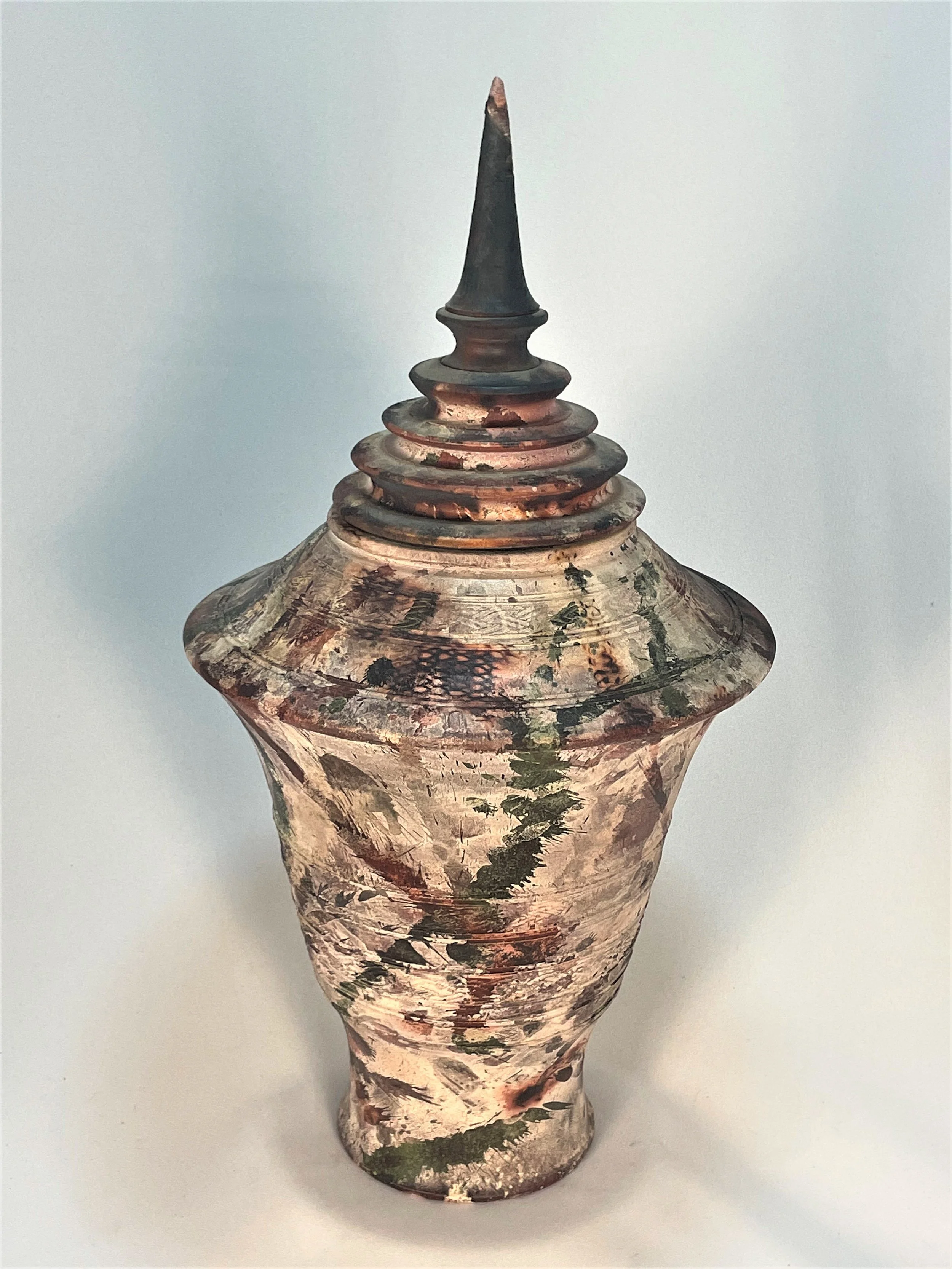
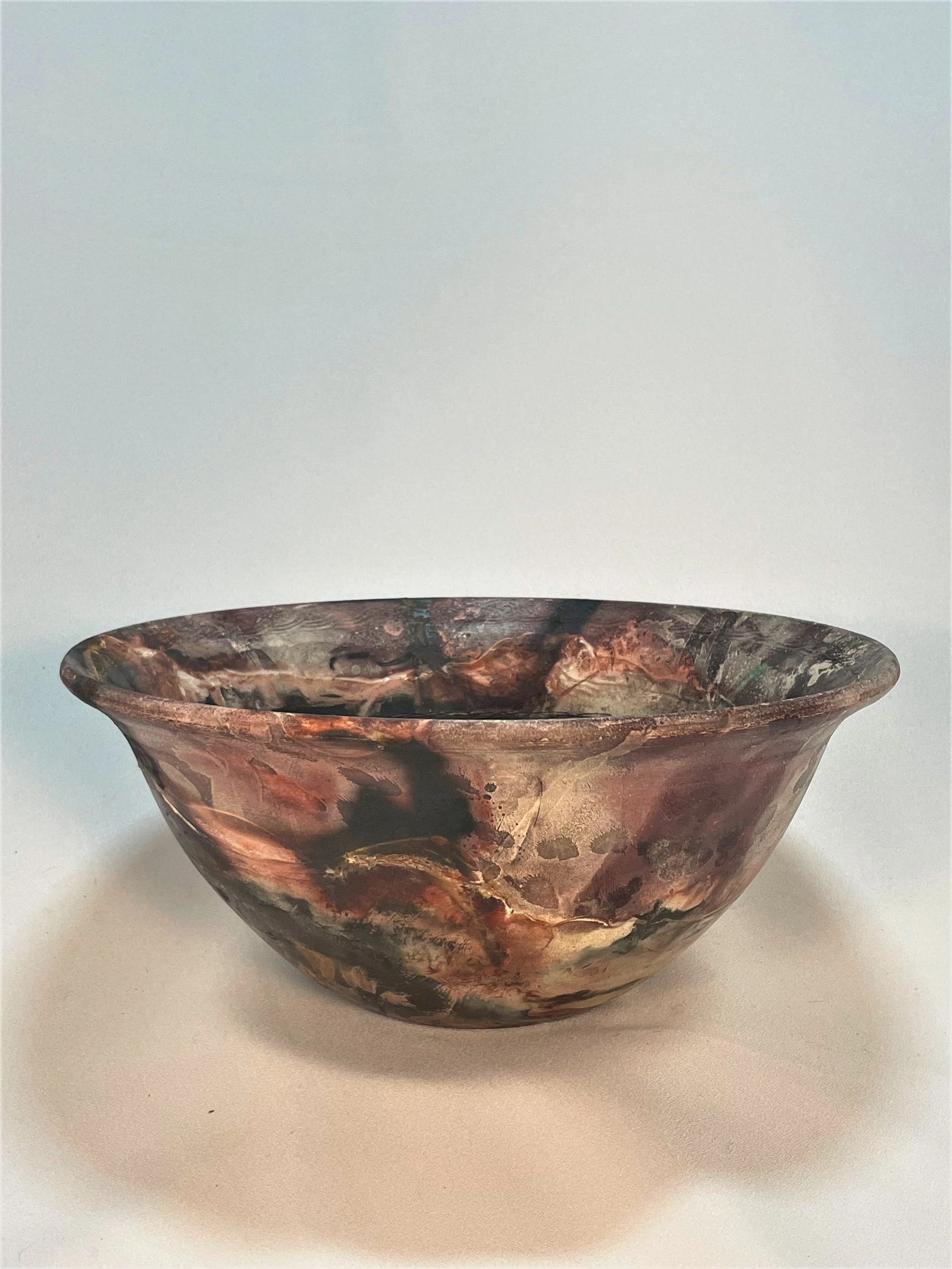
Tiger Saggar Raku
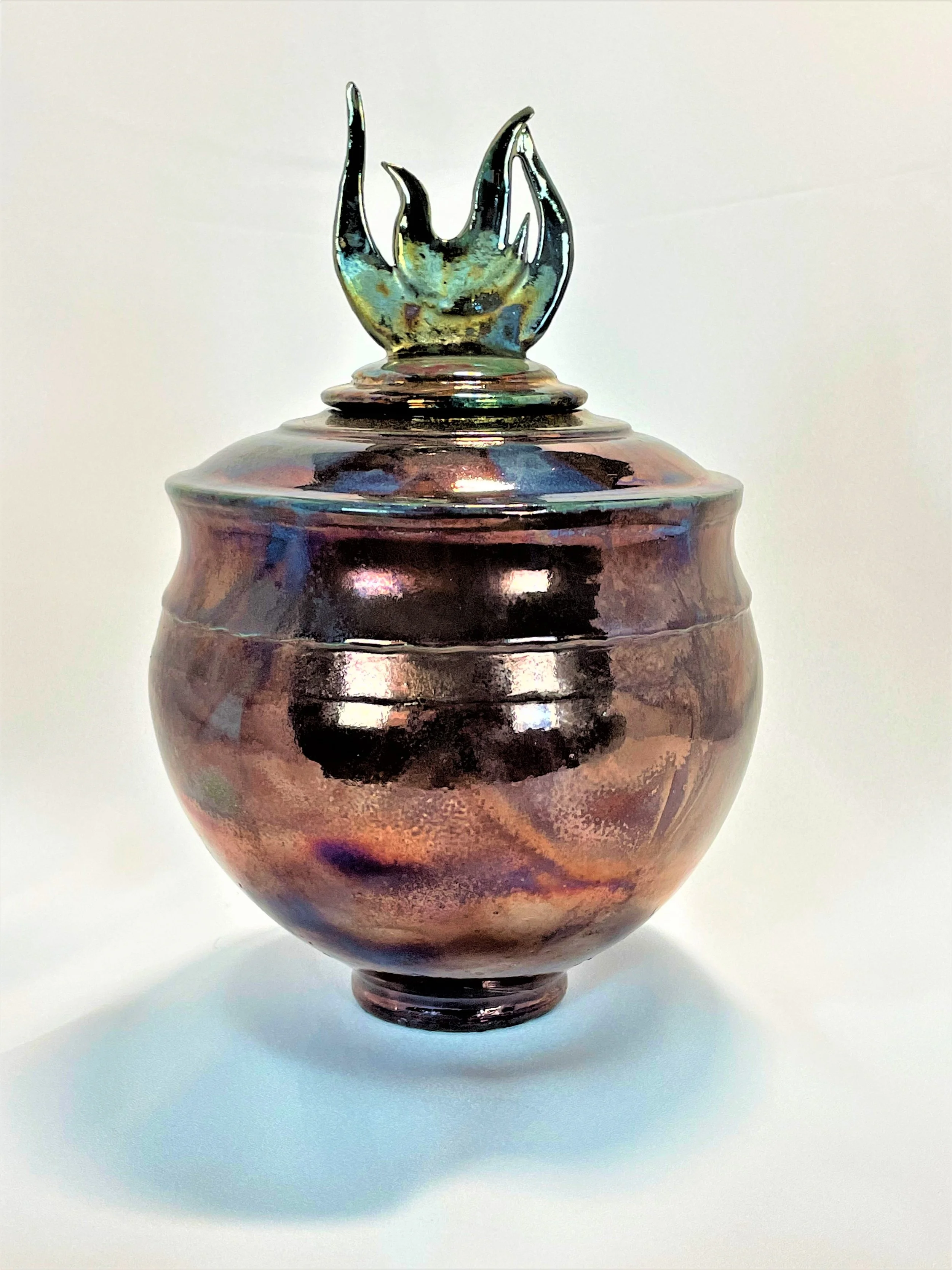
Saggar firing denotes the use of a chamber to place the piece of ware into for the firing process. Traditional Saggar firing uses combustible materials inside the saggar chamber to leave an imprint on the final fired piece as a result of the firing.
My Saggar process is different from the traditional Saggar process. The ware is first bisqued, and then affected with various metallic oxides, pieces of copper and other metals after first dipping the piece in an acid wash. This is a very different form of Raku as the piece is never glazed at all. The resulting finish on the pieces is the result of the interaction of the acid, the various metal oxides and metals placed on the ware finally fired in a Raku kiln with the piece in an aluminum foil saggar cocoon.
My Tiger Saggar pieces in particular show the dynamic interaction of the acid, the oxides and the COPPER in one form or another fired in the metallic cocoon. Finally the piece is pulled from the kiln and is pulled from the ashes and debris from the process to unveil what is an amazing result.
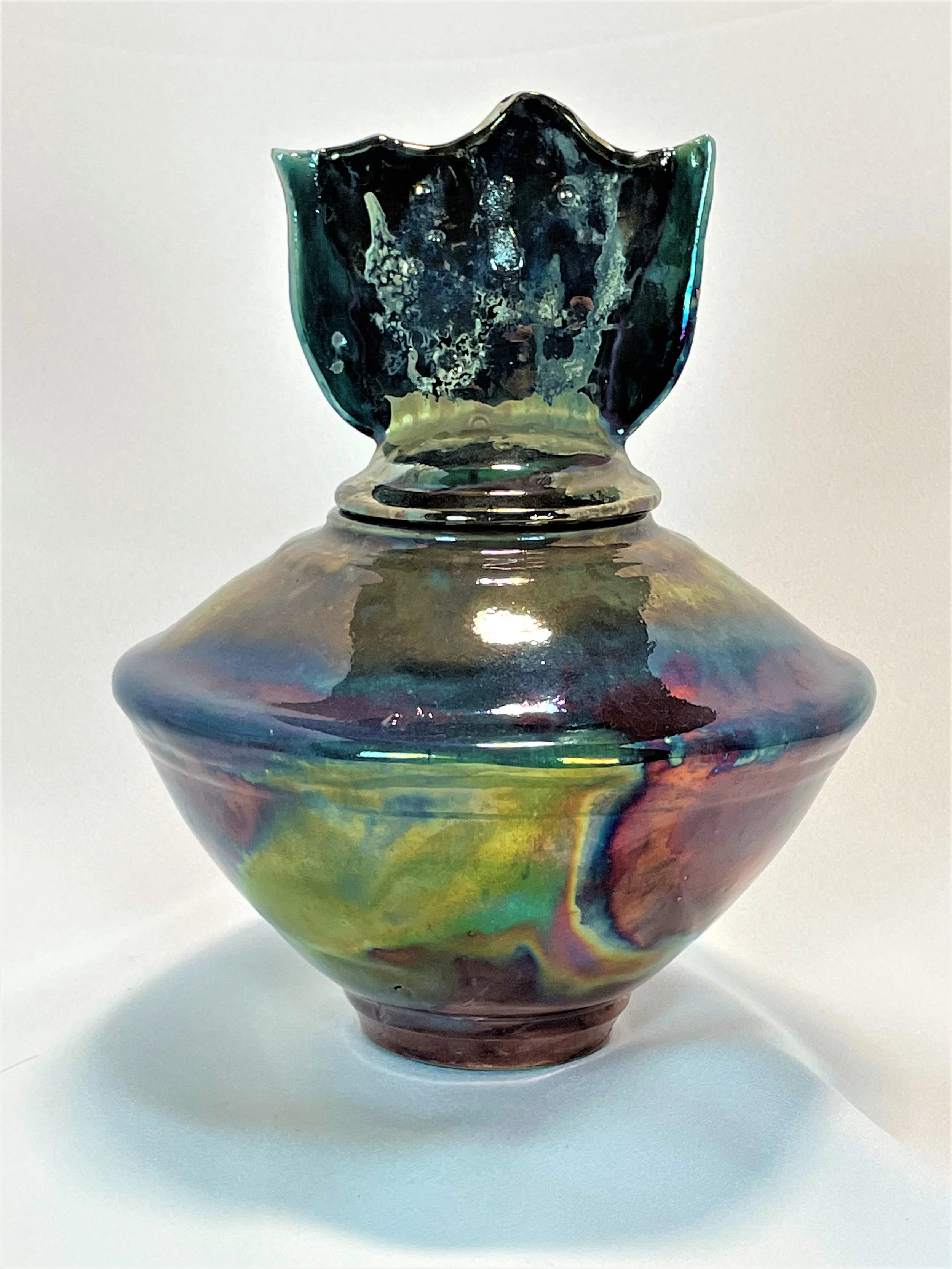

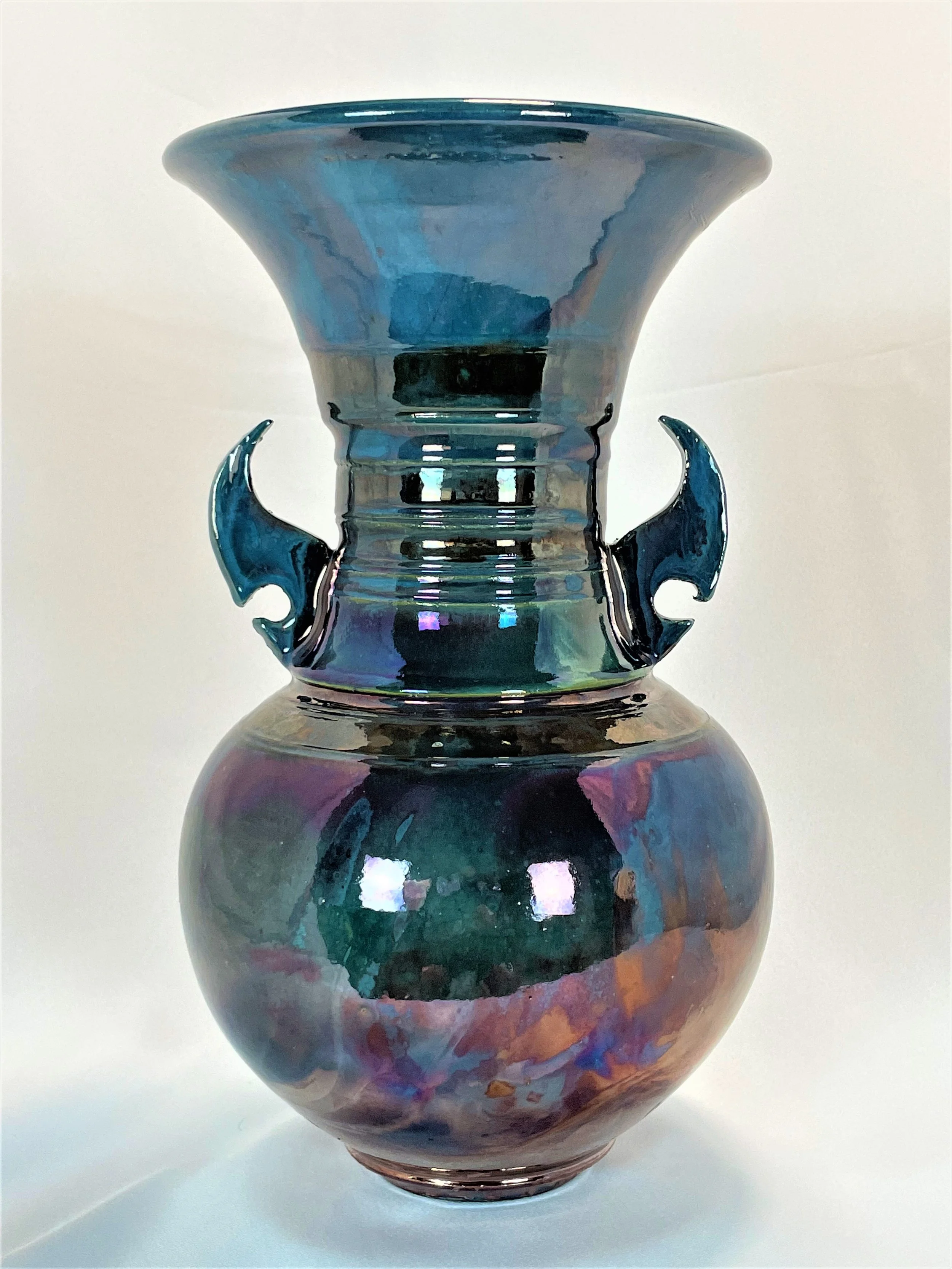
Opalescence Raku
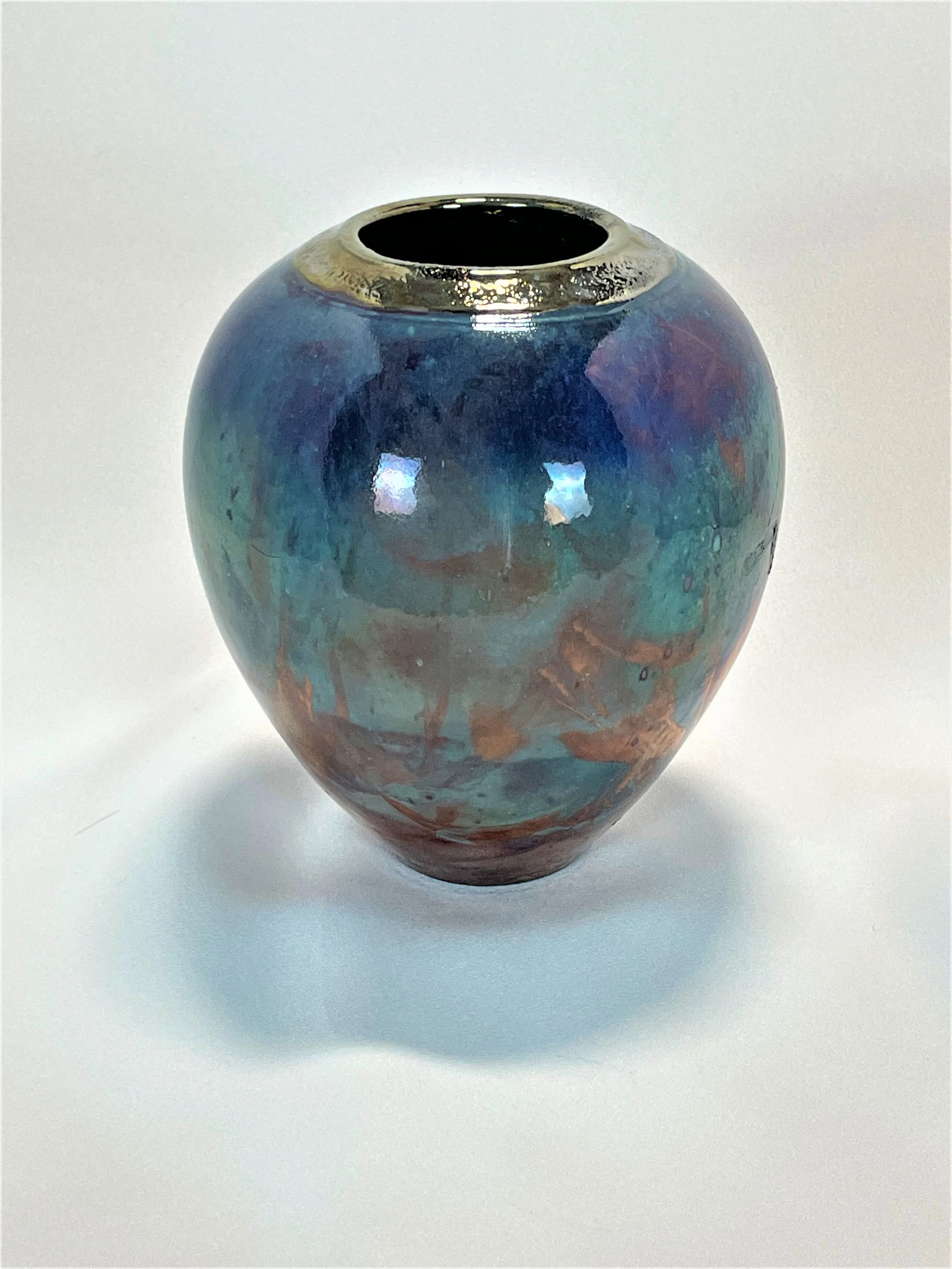
This is a colored luster technique that involves a very specific glaze that in particular yields a wide range of beautiful colorations. If anyone is familiar with one of my favorite gems, the Australian Black Opal, you’re familiar with the amazing colors that are produced within these beautiful gems.
The glaze used in the process is simply amazing and yields a wide variation of color. The effect is a beautiful metallic opalescent finish. I often utilize my gold glaze on these pieces for accents.


Copper Matte Raku
Copper Matt Finishes
All glazes have certain basic components, glass in one form or another and fluxing components that make the glass melt. The specific glass and fluxing components will leave a different effect on the surface of the piece.
There are many copper matte variations in Raku. I primarily use bone ash as a component to yield a sand like matted texture on the piece. Copper, Cobalt and Manganese provide the coloration which can be anything from a brilliant sandy copper finish to multi-colored.
Color & Crackle Raku
In this section of Raku pieces you will find pieces in which the intent was primarily to either produce beautiful colored pieces or pieces that distinctly exhibit Raku crackle response on the surface.
The reason that I have grouped Color and Crackle together is that to achieve pieces in which Color is the objective, the piece is often allowed to cool down a bit prior to putting the piece into the reduction chamber. So even if the desire is Color, by virtue of the piece cooling somewhat, various glazes will as well produce a crackle effect.
If the intent is specifically to produce the Crackle effect, the glazed piece after firing to a melting temperature is taken from the kiln hot and allowed to cool for a short period prior to being placed in the reduction chamber. Because the glaze cools quicker than the clay body it tends to crack over the body of the piece.
If I listen closely, and I do exactly that, I even hear the glaze crack as it cools. Then the piece is placed into the reduction chamber and smoked. The result is the beautiful and interesting crackle effect from the smoke infused into the cracks in the glaze.


Jewels of Atlantis
As I developed these pieces, I imagined that these pieces might be relics of the fabled lost Kingdom of Atlantis. Over centuries, the Kingdom’s gold adhered to the surface of the pieces when they wefell into the ocean as the mythical city was destroyed. Thus were born the “Jewels of Atlantis.”
The beauty comes from the myriad of colors and gold on the surface of each raku piece. My fantasy is that the adhered gold glistening on the cratered surface is like melted gold that adhered to the surface, like growth on the surface of coral beneath the sea.
It's not necessary that you play along with my Atlantis fantasy. Hopefully though, you find them as beautiful and pleasing to the eye as I do.
Many of the pieces have decorative lids indicative of the particular styling of the artists of Atlantis. You are welcome to buy these pieces with our without the ornamental lid and display it as you please. You’ll discover that option in the Shop.
Luster Raku
What pieces do I classify as Luster and Colored Luster? The answer is anything from a piece that is a bright and lustrous copper penny color to pieces that are colorful but have very notable portions of the piece that have metallic lusters on them.
Unlike the colored crackle pieces, the heat the piece was finished at was hot enough that the crackle effect typically doesn’t occur. It certainly was not a goal for these pieces
Luster and Colored Luster pieces often involve the very same glazes. The deciding factor for the specific resulting finish on the piece is the temperature and amount of reduction.
There is a finesse to achieving these finishes that comes from many tests and exploration.
Modern Raku Pottery
Modern Raku is derived from the original 16th century Japanese process for firing the ceremonial Tea bowls. In the 1960’s that process was revolutionized to start the modern era and art-form of Raku firing. The modern era of Raku has emerged with so many diverse variations that the possibilities are almost endless.
The Raku process involves a relatively quick firing (often up to 2,000 degrees in approximately 30 minutes) and pulling the piece from the kiln while still hot, often still glowing bright red. Then placing the piece into a chamber with a combustible material. The hot piece of ceramic ware naturally lights the combustible material on fire. The chamber is then closed and naturally the fire becomes smoke.
The secret of Raku lies in that smoke and the resulting chemical reaction called reduction, or denial of oxygen which is often essential to the final beauty of the piece. It is specifically the chemical reduction or denial of oxygen from the smoke that brings out the metallics in the glazes to produce one of many different final beautiful effects.
There is finesse and technique inherent to every form of pottery and perhaps more so in the Raku firing process. Even subtle differences in the firing process make a considerable difference to the results achieved.
Perhaps the most influential thing that affects the final outcome of the glazed surface is the temperature the piece is fired to and more so the temperature that the piece is pulled from the kiln. If a glaze that contains Copper is allowed to cool to a certain degree the piece will come out blue or green or some combination. However if that same piece is placed into the reduction chamber at a high enough temperature, the piece may turn out anything from a bright copper penny finish to a metallic multi-colored piece whether shiny or matte.
This short video is a perfect example. All of the pieces in the video are copper matte pieces that have the exact same glaze sprayed on the surface. However, you will see that the final effects on the pieces are considerably different. The final metallic colors on the pieces range from blues (Cooler) to a bright copper surface (hottest) and a multitude of effects in between. The exact same glaze producing very different final variations and the main variable that differed was the temperature that the piece was both pulled from the Raku kiln and the temperature at which the piece was reduced and sometimes the amount of combustible material in the reduction chamber used to create the smoke
Assorted Raku Gallery
Click a pot to see more like it or go directly to the Shop to see all our collections of Raku

Jewels Of Atlantis Vessel w/o lid #45

Jewels Of Atlantis Vessel #333
Jewels Of Atlantis Vessel
Tiger Saggar Vessel w/o lid

Tiger Saggar Empress Vessel

Tiger Saggar Vessel with lid

Tiger Saggar Bowl

Luster Empress
Color & Crackle Vessel with Lid
Make it stand out.
-

Jewels of Atlantis
As I developed these pieces my imagination came into play that these pieces are relics of the fabled land of Atlantis. Over centuries the gold of the kingdom of Atlantis adhered to the surface after the pieces were thrown into the ocean after the destruction of the mythical city. The beauty comes from the myriad of colors and gold on the surface of the pieceMy fantasy is that the adhered gold glistening on the cratered surface is like melted gold that adhered to coral like growth on the surface of the pieces
Many of the pieces have decorative lids indicative of the particular styling of the artists of Atlantis.
It's not necessary that you play along with my Atlantis fantasy. Hopefully though, you find them as beautiful and pleasing to the eye as I do.
-
Build it.
It all begins with an idea. Maybe you want to launch a business. Maybe you want to turn a hobby into something more. Or maybe you have a creative project to share with the world. Whatever it is, the way you tell your story online can make all the difference.
-
Grow it.
It all begins with an idea. Maybe you want to launch a business. Maybe you want to turn a hobby into something more. Or maybe you have a creative project to share with the world. Whatever it is, the way you tell your story online can make all the difference.
Jewels of Atlantis

As I developed these pieces my imagination came into play that these pieces are relics of the fabled land of Atlantis. Over centuries the gold of the kingdom of Atlantis adhered to the surface after the pieces were thrown into the ocean after the destruction of the mythical city. The beauty comes from the myriad of colors and gold on the surface of the pieceMy fantasy is that the adhered gold glistening on the cratered surface is like melted gold that adhered to coral like growth on the surface of the piecesJ
Many of the pieces have decorative lids indicative of the particular styling of the artists of Atlantis.
It's not necessary that you play along with my Atlantis fantasy. Hopefully though, you find them as beautiful and pleasing to the eye as I do